F. Scott Fitzgerald
A Moveable FeastF. Scott Fitzgerald emerges in Ernest Hemingway’s recollections as a writer of extraordinary natural talent and a friend whose charm and vulnerability could not shield his work from mounting pressures. The account traces their relationship from an uneasy first meeting to a bond shaped by literary admiration, drinking, domestic conflict, and Fitzgerald’s repeated struggle to keep writing. Its governing image is a gift that first works effortlessly, then becomes an object of self-conscious scrutiny: Fitzgerald can recognize what has been damaged, but recognition does not restore the original ease.
Identity and Early Impression
Hemingway compares Fitzgerald’s early talent to the delicate pattern on a butterfly’s wings: at first it seems instinctive, almost beyond the writer’s understanding. Later, Fitzgerald becomes conscious of the gift and its construction, and, in the metaphor, loses the freedom of flight, retaining only the memory of how effortless it once felt. This retrospective image makes the account more than a portrait of personal charm; it frames Fitzgerald’s artistic life as a struggle between natural ability and the burdens of knowing too much about it.
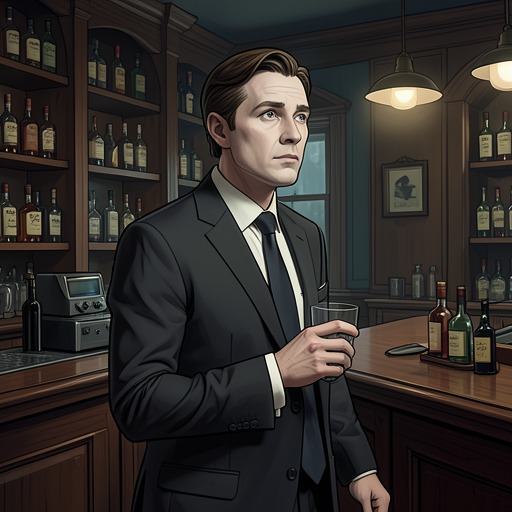
Their first meeting takes place at the Dingo Bar on rue Delambre. Fitzgerald arrives with Dunc Chaplin, whom he introduces as a famous pitcher. Hemingway has not followed Princeton baseball and does not know Chaplin’s reputation, but finds him relaxed, friendly, and immediately appealing. He is more at ease with Chaplin than with Fitzgerald at first, even as he is curious about the famous writer who has come to meet him.
Hemingway remembers Fitzgerald’s appearance in careful detail: very fair, wavy hair, a high forehead, lively eyes, a delicate mouth, and a face that seems almost too pretty for a man. Fitzgerald talks at length about Hemingway’s writing and praises it so openly that Hemingway, embarrassed by praise delivered to his face, watches him rather than listening closely. Fitzgerald orders champagne for the group. Hemingway’s attention to his appearance and manner registers both the fascination of the encounter and the distance between Fitzgerald’s enthusiastic praise and Hemingway’s own reserve.
Writing, Reputation, and Friendship
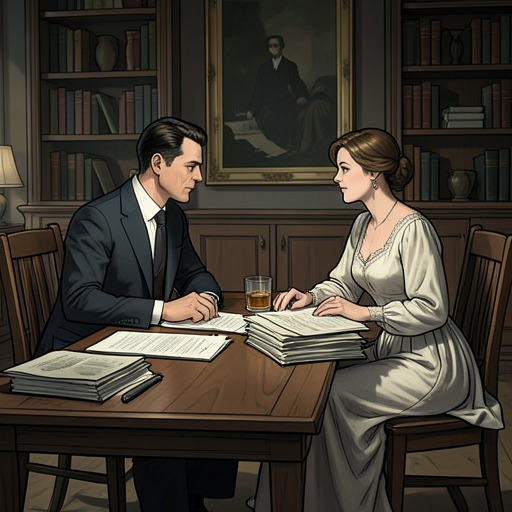
When the two meet again at the Closerie des Lilas, Fitzgerald asks about the café and tries to appreciate it because Hemingway does. Their conversation ranges across writers, publishers, agents, critics, and the economics of literary success. Fitzgerald is cynical and funny, but also jolly and endearing; he speaks of his earlier books without bitterness. Hemingway takes this as evidence that Fitzgerald’s new novel must be good, while noticing that he is shy about its quality.
Fitzgerald tells Hemingway that The Great Gatsby has received excellent reviews but is not selling well. He is puzzled and hurt by the weak sales, yet remains quietly pleased with the book itself. He wants Hemingway to read it and explains that his last copy is still with someone who borrowed it. Hemingway also learns that Fitzgerald can revise stories for commercial submission, shaping them into the kind of magazine fiction that sells. Hemingway regards this practice as a compromise, while Fitzgerald acknowledges its commercial purpose. The difference exposes two distinct pressures on literary work: Fitzgerald’s knowledge of the market and Hemingway’s unease about writing to satisfy it.
Fitzgerald’s conversation and conduct complicate Hemingway’s initial impressions. Over two whisky and sodas at the café, Hemingway watches for a change in Fitzgerald’s behavior but sees none: he remains intelligent, charming, and composed. A few days later, Fitzgerald brings him The Great Gatsby. Hemingway initially dislikes its garish dust jacket, which Fitzgerald explains is connected to an important image in the story. After reading the novel, Hemingway decides that its quality obliges him to become a better friend, whatever Fitzgerald’s behavior may be. He knows that Fitzgerald has many friends already, but chooses to become one more who will try to help.
The Lyon Journey and Fitzgerald’s Anxieties
Fitzgerald asks Hemingway to travel by train to Lyon, retrieve the small Renault he and Zelda Fitzgerald had abandoned because of bad weather, and drive it back to Paris. The prospect appeals to Hemingway: the countryside should be beautiful in late spring, and he expects to learn from the company of a successful older writer. They arrange to take the morning express, which, as Hemingway recalls, makes only one stop, at Dijon. Fitzgerald’s apparent reasonableness and the calm evening at the Closerie des Lilas help Hemingway set aside his earlier misgivings.
The return drive is repeatedly interrupted by rain. About an hour north of Lyon, they are halted by a shower; over the course of the day, passing rain stops them perhaps ten times. They shelter under trees or at roadside cafés. Hemingway recalls a generous lunch prepared by the Lyon hotel, including truffled roast chicken, bread, and white Mâcon wine. At Mâcon he buys four more bottles, which he opens at later stops. The wine briefly becomes part of the pleasure of the journey, but Fitzgerald soon grows preoccupied with his health, citing recent deaths from congestion of the lungs.
Hemingway tries to reassure him with what he remembers reading about the illness, including an authoritative medical article, and uses medical terminology to steady him. Fitzgerald nevertheless worries about reaching a town before fever and delirium begin. In the car, he asks Hemingway whether he is afraid to die; Hemingway answers that he is, at some times, more than at others. The question briefly turns their talk from travel to mortality, revealing how readily Fitzgerald’s fear enters an otherwise companionable day.
Heavy rain eventually sends them into a village café, and they reach what Hemingway believes is Châlon-sur-Saône too late to find an open drugstore. Fitzgerald goes straight to bed. He says that death itself does not concern him as much as what would happen to Zelda and their young daughter, Scotty. Although Hemingway is already responsible for Hadley Richardson and Bumby, he promises to do his best to help Fitzgerald’s family. Fitzgerald asks him to ensure that Zelda does not drink and that Scotty has an English governess. Hemingway checks Fitzgerald’s pulse, feels his forehead, and listens to his breathing; the signs he observes do not support Fitzgerald’s fear of the illness.
Zelda, Drinking, and the Cost to His Work
Later that night, Fitzgerald insists on getting up and calling Zelda. He explains that it is the first night he has slept apart from her since their marriage. While he waits, he drinks quickly and becomes more animated and talkative. He tells Hemingway about meeting Zelda during the war, losing her, winning her back, their marriage, and an upsetting episode at Saint-Raphaël involving Zelda and a French naval aviator. Hemingway recalls that Fitzgerald later told different versions, as if testing material for a novel, but that the first telling seemed the saddest and most convincing to him. The account preserves that uncertainty rather than establishing one version as fact.
After the journey, Fitzgerald brings The Great Gatsby to Hemingway, and Hemingway’s admiration for the novel strengthens his commitment to the friendship. A lunch invitation to Fitzgerald’s furnished flat at 14 rue de Tilsitt gives him a glimpse of the couple’s life. The flat seems gloomy and airless; the only things Hemingway can recall as unmistakably theirs are Fitzgerald’s early books, bound in light blue leather with gold titles. Fitzgerald also shows Hemingway and Hadley Richardson a large ledger recording his stories, their prices, motion-picture sales, and book earnings, year by year. He presents the accounts with the impersonal pride of a curator displaying an exhibit.
Zelda has a bad hangover after a night on Montmartre, where she and Fitzgerald argued because he wanted to stop drinking and work. Fitzgerald says that he has decided to work hard and not drink, while Zelda treats this resolve as spoiling the evening. The contrast becomes part of a broader conflict. Zelda, he says, is amused by the attention of people pursuing her, and her amusement makes him jealous; he feels obliged to accompany her, and the situation disrupts his work. The account does not reduce their difficulties to a single cause, but shows how drinking, jealousy, and competing claims on attention press against his attempts to write.
Decline, Later Vulnerability, and Narrative Role
Through late spring and early summer, Fitzgerald tries to work but manages it only in snatches. Hemingway remembers him as cheerful, sometimes desperately so, and as a good companion with a gift for jokes. When Fitzgerald has especially difficult periods, Hemingway listens and encourages him to hold on to his capacity for writing. Fitzgerald can still make fun of himself, a sign Hemingway takes as reassuring. During this stretch he writes one good story, “The Rich Boy,” though Hemingway believes he can do better.
By the autumn, after Fitzgerald and Zelda have spent time at Cap d’Antibes, Hemingway finds him changed. He has not sobered up on the Riviera and is now drunk during the day as well as at night. He comes to Hemingway’s home at 113 rue Notre-Dame-des-Champs at any hour when drunk, and has begun treating people he considers inferior rudely. Hemingway sets this deterioration beside his own work: while he is in Spain he starts a novel and finishes its first draft in Paris in September, whereas Fitzgerald’s efforts remain fractured. The contrast is not simply between success and failure; it marks how differently the two writers’ working lives are unfolding at the same time.
Much later, after Zelda has what was then called her first nervous breakdown, Fitzgerald asks Hemingway to lunch at Michaud’s. He says that he has something important to ask and insists that Hemingway answer as truthfully as possible. Fitzgerald has not prepared by drinking, and wine at the meal does not affect him. They discuss work and acquaintances before, near the end of lunch, Fitzgerald discloses that he has never slept with anyone but Zelda. He then explains that Zelda had made a remark about his physical adequacy, which has troubled him ever since, and asks Hemingway to tell him the truth. Hemingway takes him toward an office, but the supplied account ends before revealing what answer he gives.
That unfinished exchange returns the portrait to the tension between confidence and self-scrutiny. Fitzgerald can be socially fluent, funny, and hospitable; he can also become deeply dependent on another person’s judgment about a private fear. Hemingway’s narrative holds both versions together, without resolving them into a simple verdict. Fitzgerald’s literary gift remains evident in the novel that secures Hemingway’s loyalty, while the pressures around drinking, marriage, commercial work, and self-doubt make the ease of that gift increasingly difficult to recover.